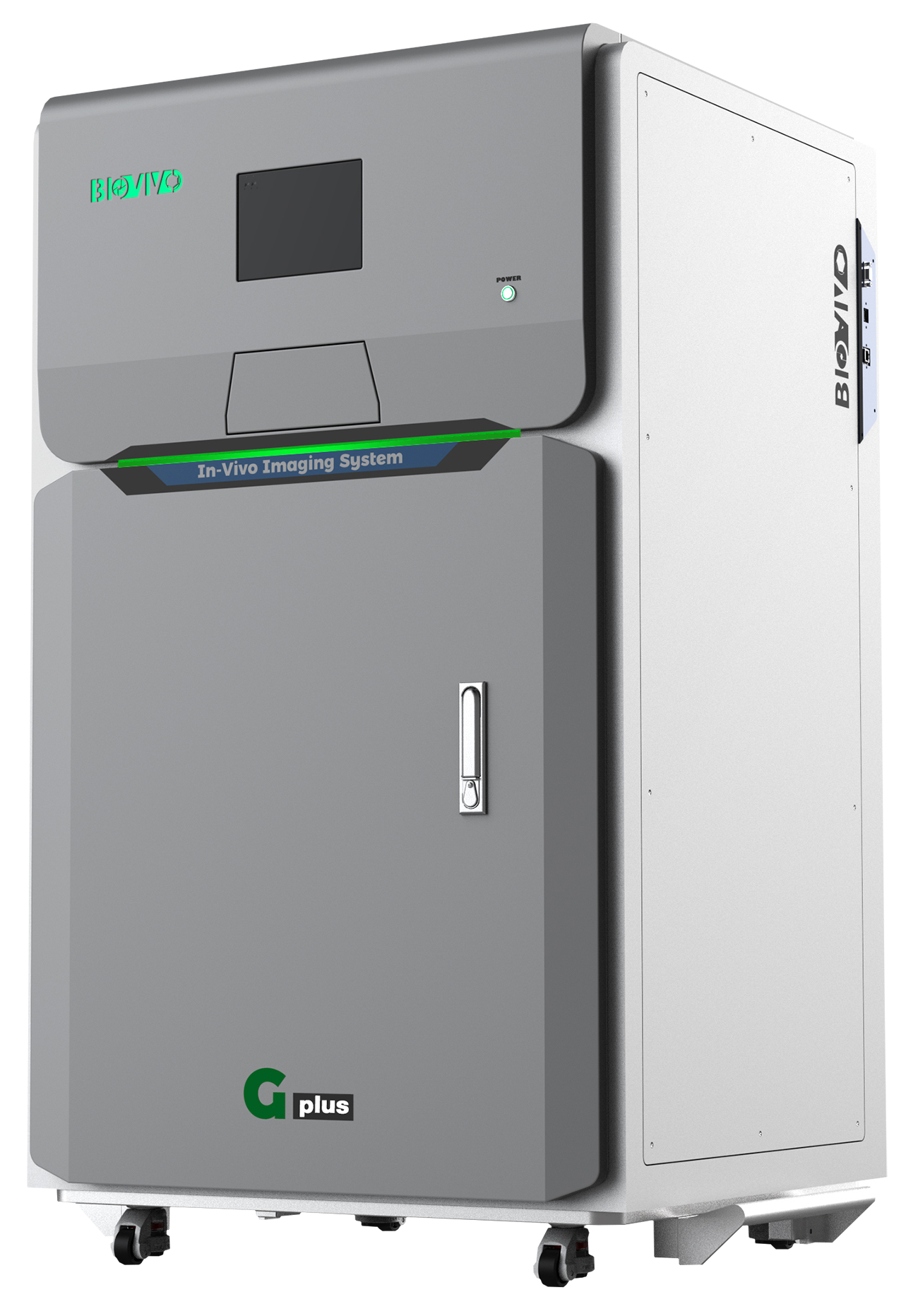

BIOVIVO™ G plus Optical Imaging and Analysis System for Fluorescent and Bioluminescent Signals in vitro (Plants)
BIOVIVO™ G plus Optical Imaging and Analysis System for Fluorescent and Bioluminescent Signals in vitro (Plants)
- High Sensitivity
Equipped with a cooled back-illuminated CCD camera, achieving a quantum efficiency of up to 95%. Deep cooling of the sensor effectively reduces background noise caused by dark current, ensuring exceptionally high sensitivity in detecting even weak signals. This guarantees reliable results for both bioluminescent and fluorescent in vivo imaging.
- High Image Clarity
The standard camera offers 4-megapixel resolution. Higher resolution camera options (from 1000×1000 to 4000×4000 pixels) are available. The system provides detailed, high-quality images without compromising sensitivity.
- High Acquisition Speed
A high-speed fixed lens with an aperture of f/≤0.9, supporting both automatic and manual focusing, significantly increases the optical signal acquisition speed. This reduces image formation time, lowers noise levels caused by long exposures, and effectively improves the signal-to-noise ratio in the final image.
- Multispectral Capabilities
Powerful narrow-band LED light sources, with the option to upgrade to a 150-watt halogen lamp (spectral range 400-1000 nm), combined with an extensive set of optical filters, allow for work with a wide range of fluorescent dyes and meet their excitation requirements.
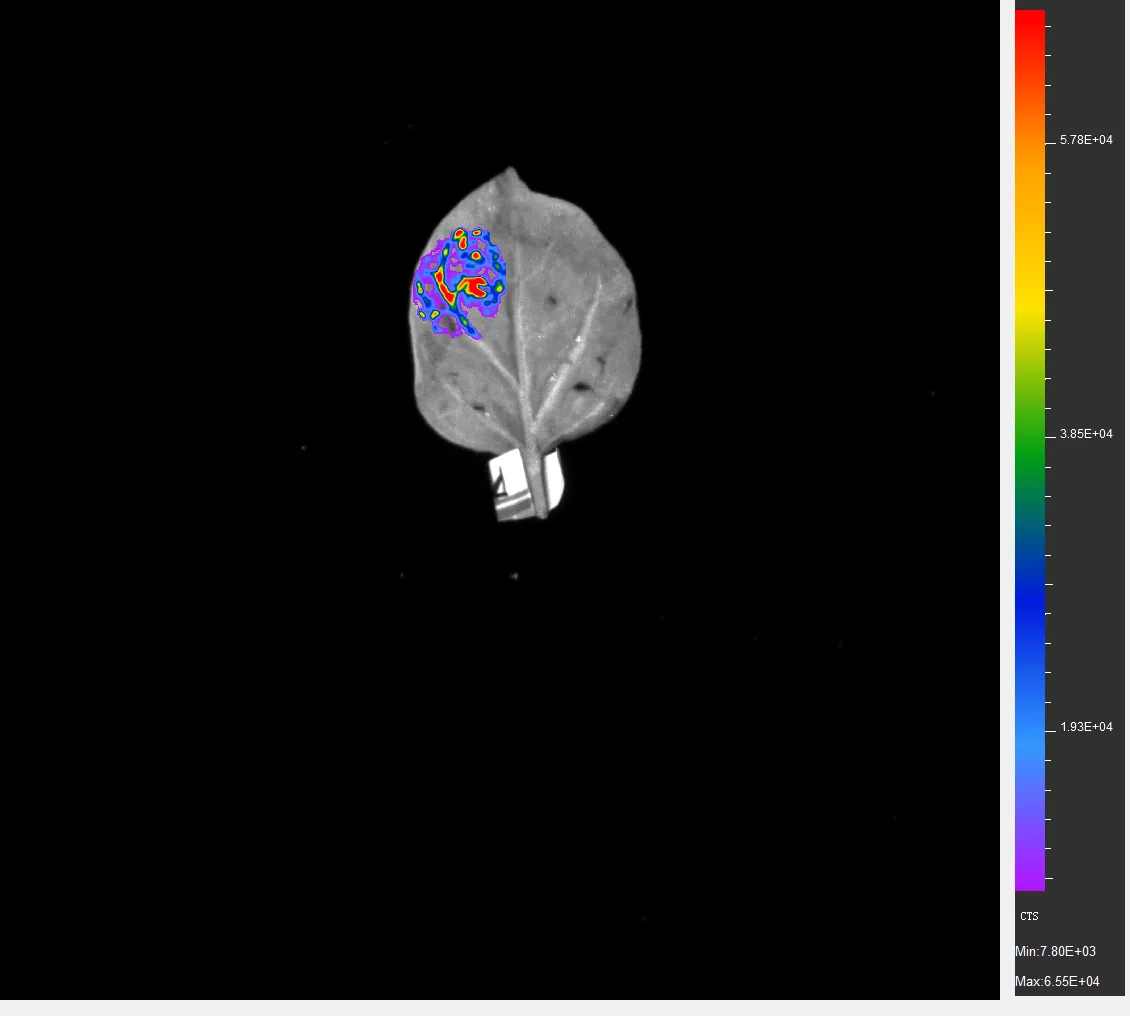
The system features multispectral fluorescence imaging with UV excitation, enabling the assessment of plant physiological states under various stresses such as drought, pest and disease infestation, environmental pollution, nitrogen deficiency, and others.
- Illumination Simulation Module
The illumination system, combining 8 spectral ranges (UV-visible-near IR), simulates sunlight and includes spectra: UV (365 nm), blue (450 nm), green (525 nm), yellow (590 nm), red (630 nm), deep red (665 nm), near IR (735 nm), and full-spectrum white light. The intensity and duration of illumination for each spectrum or their combinations can be freely adjusted. The maximum illumination intensity reaches 26,000 lux (at 400 mm distance), making the system suitable for research on plant biorhythms and photoperiodic responses.
- Lateral Imaging Module (for side view)
Resolutions of 2880 × 2880 pixels and 8.3 megapixels ensure detailed, high-quality images. With a motorized rotating stage, simultaneous imaging of 8 Petri dishes (10 cm diameter) is possible.
- Multifunctionality
Temperature and humidity control within the light-tight chamber. Equipped with a thermoregulated stage with a temperature range of 16°C to 45°C, suitable for studies related to various types of temperature stress.
- High Throughput
Allows for simultaneous imaging of 16 samples in soil pots or 10 cm diameter Petri dishes, meeting the requirements for high-throughput screening.
- Multi-Sample Operation
The system has a field of view for imaging at least 400×400 mm. The continuously adjustable stage with 1 mm positioning accuracy allows for continuous dynamic observation of plants at all stages of their life cycle – from seed germination and seedling stage to mature plant formation.
- Research on plant stress resistance and breeding
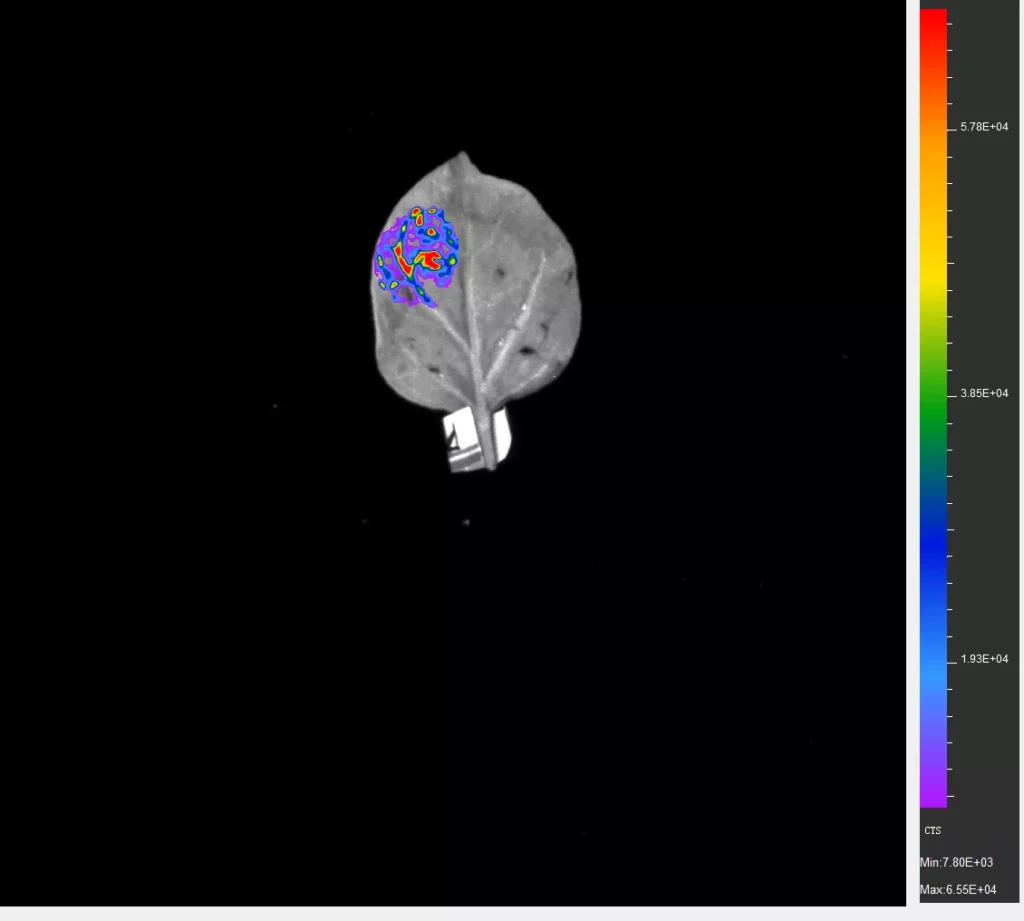
- Study of protein interactions using transient expression in tobacco
- Investigation of gene expression regulation in plants in vivo
- Study of signaling pathways in plants in vivo
- Research on plant growth and development
- Plant phenotyping
- Study of plant biological rhythms
- Research on plant photoperiodism
- Study of light-induced processes in plants
- Research on plant diseases and immune responses


- Professional Software
The LabEasy™ series software, with its completely redesigned interface, features a simple and intuitive user experience, allowing for quick mastery of controls and easy execution of imaging tasks that meet a wide variety of experimental requirements.
Equipped with intelligent AI-based algorithms with deep self-learning capabilities. The statistical analysis function for spectral distribution in an image helps to quickly recognize useful signals and separate them from the background. NIST (USA) standard calibration, professional quantitative analysis functions, fast and accurate determination of Regions of Interest (ROI). Quantitative analysis is supported in various units of measurement, including CTS, CPS, Ph/s/cm²/sr, nW/cm², and others.