- /
- InVivo BioVivo™
- /
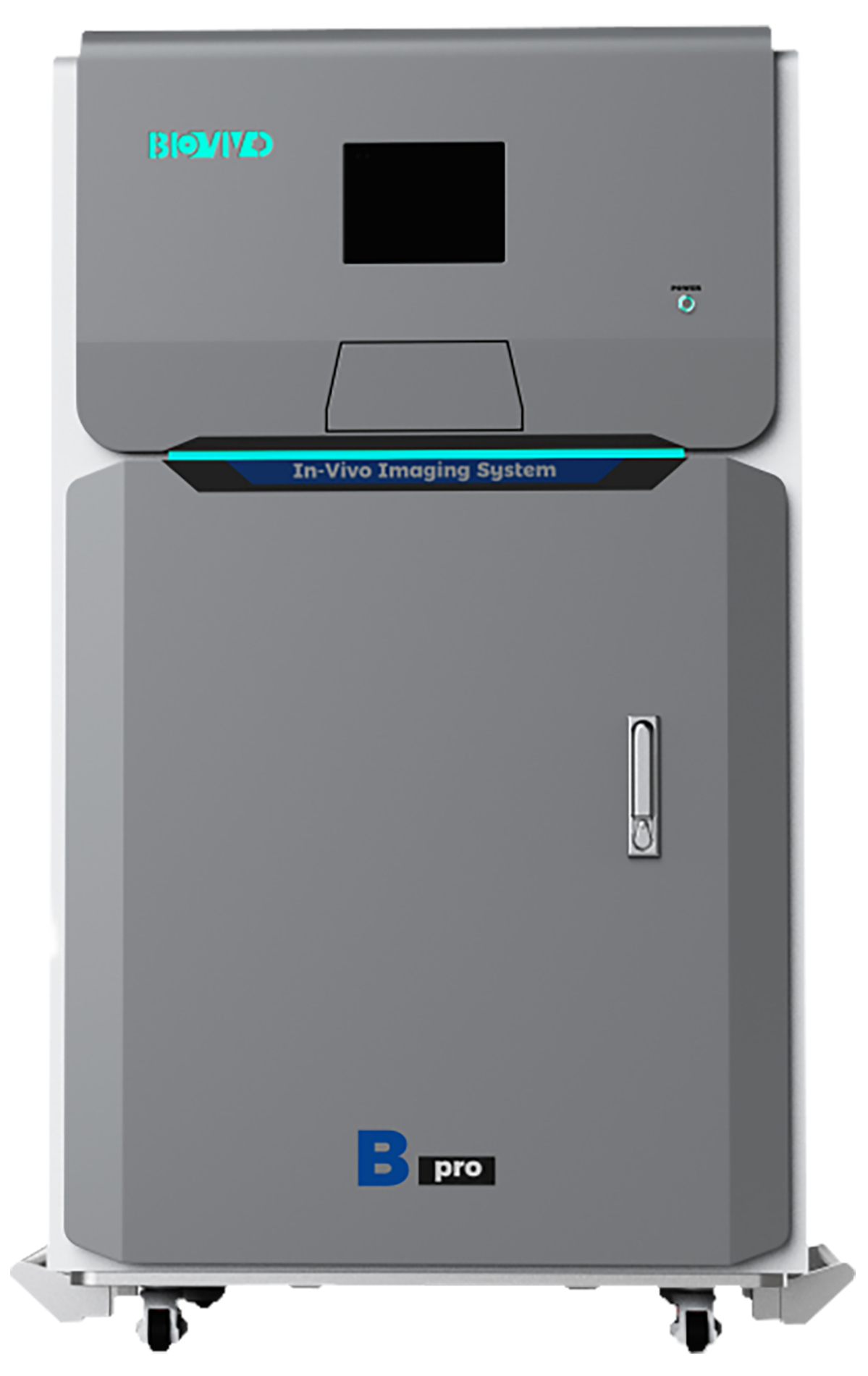
- BioVivo™ B pro

BIOVIVO™ B pro In Vivo Optical Imaging and Analysis System for Fluorescent and Bioluminescent Signals (Laboratory Animals)
BIOVIVO™ B pro In Vivo Optical Imaging and Analysis System for Fluorescent and Bioluminescent Signals (Laboratory Animals)
- High Sensitivity
Equipped with a specialized back-illuminated cooled CCD camera designed for in vivo imaging systems. Quantum efficiency reaches 95% at 500-700 nm. The Ultral mode, utilizing multi-stage cooling technology, can reduce the camera temperature to -100°C, effectively minimizing dark current background noise. This ensures high sensitivity for detecting low-intensity signals, enabling in vivo bioluminescence and fluorescence imaging experiments.
- High Imaging Speed
High-speed fixed lens with an aperture of f/≤0.9 significantly increases optical signal acquisition speed. This reduces image formation time, decreases noise from long exposures, and effectively improves the signal-to-noise ratio in the final image.
- Full Spectrum
Standard configuration includes a halogen light source with enhanced near-infrared emission and a spectral range of 400-1000 nm, providing superior in vivo near-infrared fluorescence imaging. Optional installation of a high-energy lamp with a range of 240-1200 nm, or additional installation of 10 sets of high-brightness narrowband LED light sources to meet the excitation requirements for a wider range of fluorescent dyes.
- High Throughput
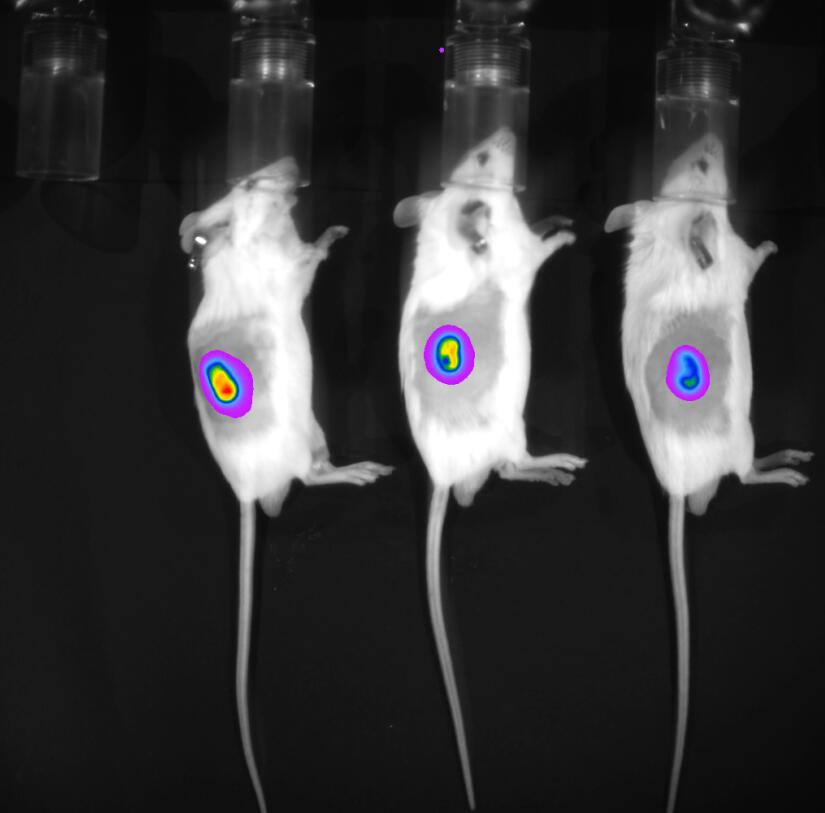
Enables simultaneous imaging of 16 mice, meeting high-throughput sample screening requirements.
- Multiple Sample Handling
The system features an imaging field of view of at least 400×400 mm. The continuously adjustable height stage accommodates various animal models, including zebrafish, mice, rats, rabbits, monkeys, and pigs.
- Multifunctionality
Supports the following imaging modalities: high-resolution X-ray imaging (up to 100 μm), Cherenkov radiation imaging, upconversion fluorescence imaging, and ultrasound imaging.
- Genetic Research:
Gene therapy, functional genome analysis, gene expression regulation, transgenic animal models.
- Oncology Research:
Tumor formation and apoptosis, tumor metastasis, tumor immunology, tumor development mechanisms and therapy.
- Stem Cell Research:
Stem cell genetics and development, stem cell migration (homing), damaged stem cell repair, stem cell therapy.
- Pharmaceutical Research:
New drug screening, therapeutic efficacy evaluation, gene drug development, drug metabolism and delivery studies.
- Disease Research:
Cardiovascular and cerebrovascular diseases, metabolic disorders, immune diseases, bacterial/viral infections, and inflammatory process studies.
- Materials Research:
Biomaterials, targeted delivery materials, quantum dots, nanoprobes, nanoformulation delivery systems.


- Professional Software
The LabEasy™ software series features a completely redesigned interface that is simple and intuitive, enabling rapid mastery of system control and effortless execution of imaging tasks to meet diverse experimental requirements.
Equipped with intelligent AI-based algorithms with deep learning capabilities. The spectral distribution statistical analysis function on images helps rapidly identify useful signals and separate them from background. NIST (USA) standard calibration, professional quantitative analysis functions, fast and accurate region of interest (ROI) definition. Supports quantitative analysis in various units, including CTS, CPS, Ph/s/cm²/sr, nW/cm².